Compare Hunter Douglas Blind Categories
Start with the material and movement that fit the window, then compare finishes and operating options.
Real Wood Blinds
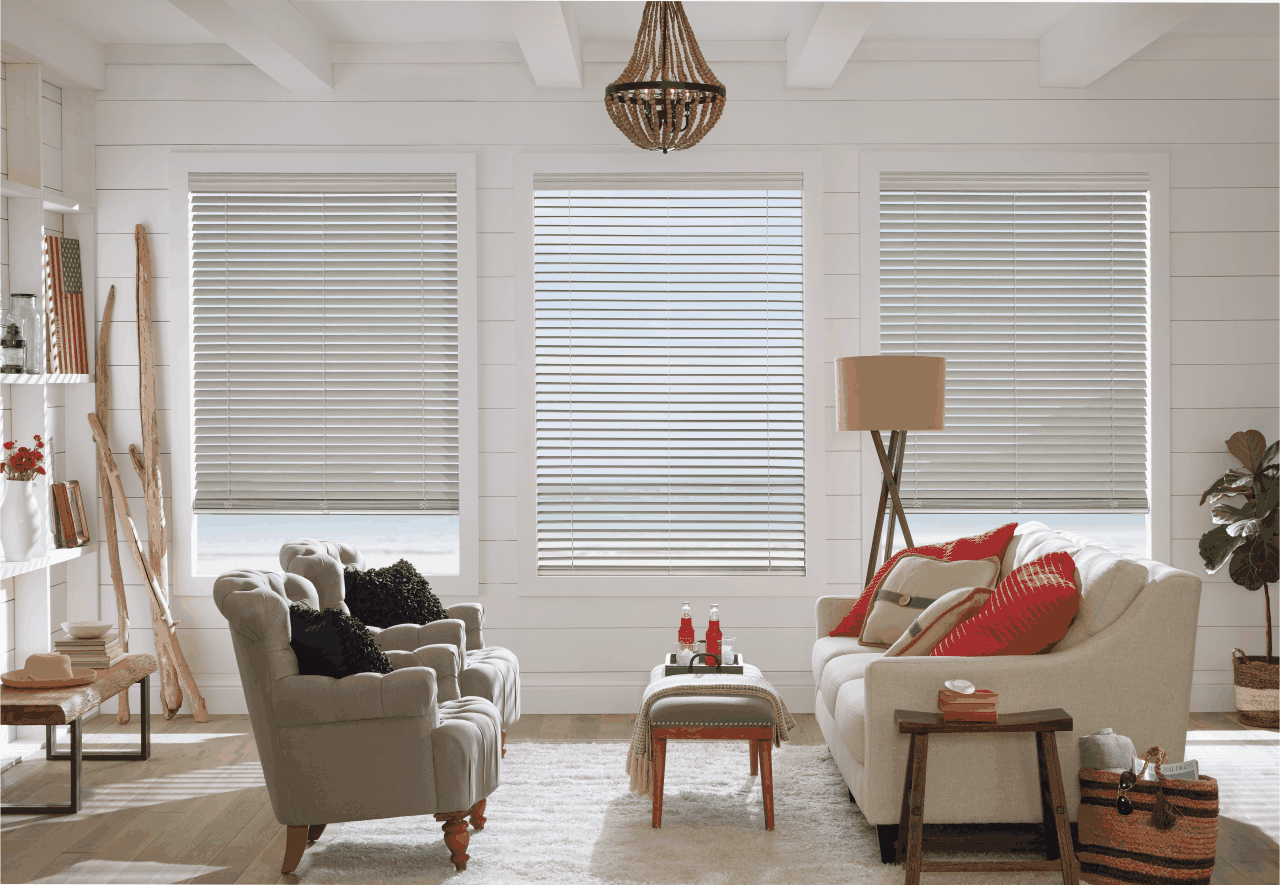
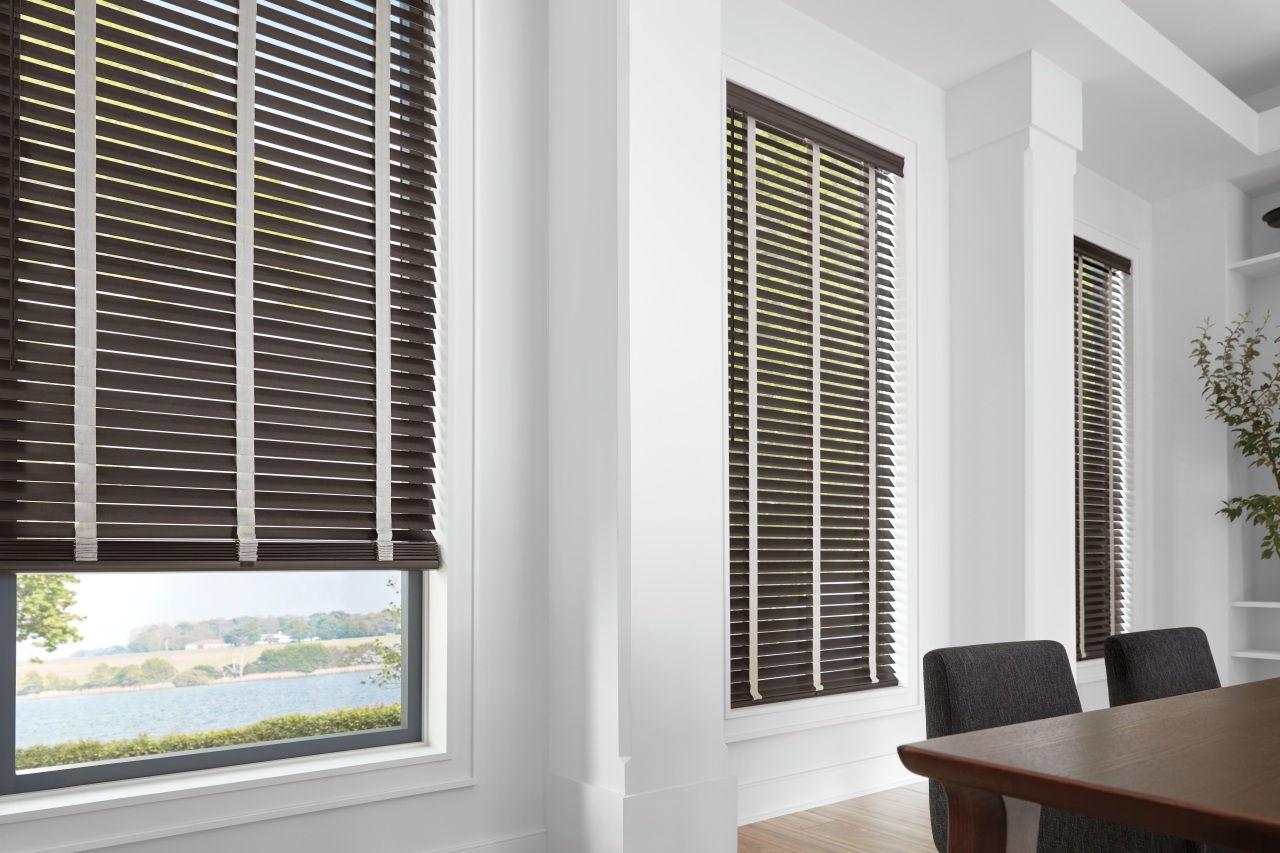
Real wood blinds bring natural warmth, grain, and a classic architectural profile. They are a strong starting point for living rooms, bedrooms, and offices where humidity is controlled. Wood finish, slat size, weight, and exposure should be considered together.
Alternative Wood Blinds
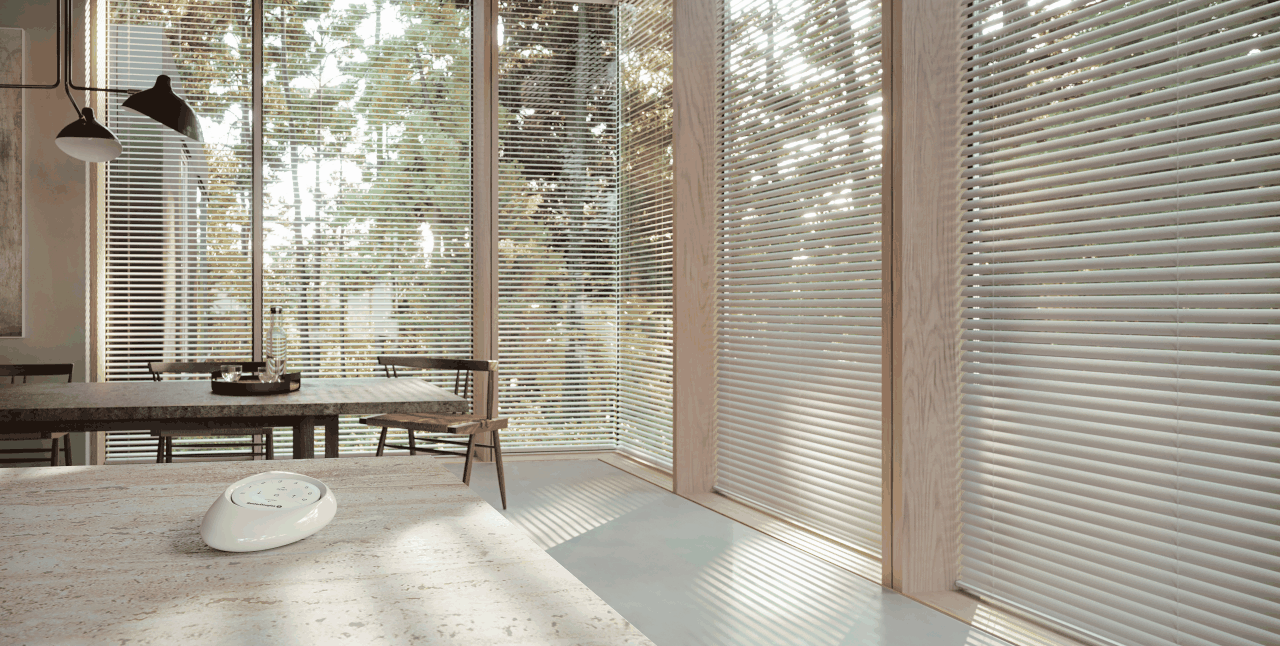
Alternative wood blinds provide a wood-inspired look with documented resistance to humidity, sun, and warping. They can be a practical choice for selected kitchens, baths, and sun-exposed rooms, but that resistance does not establish suitability for direct water exposure.
Vertical and Panel-Style Blinds
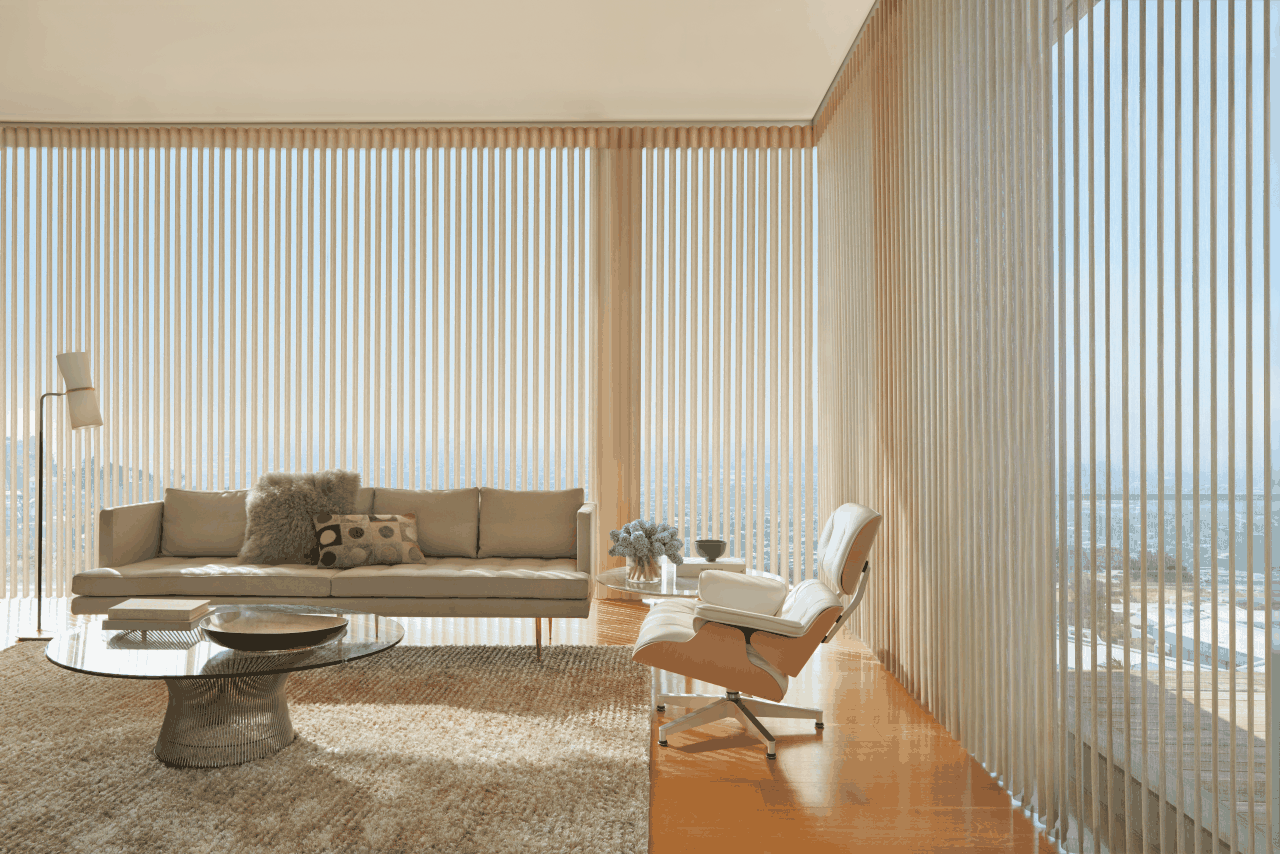
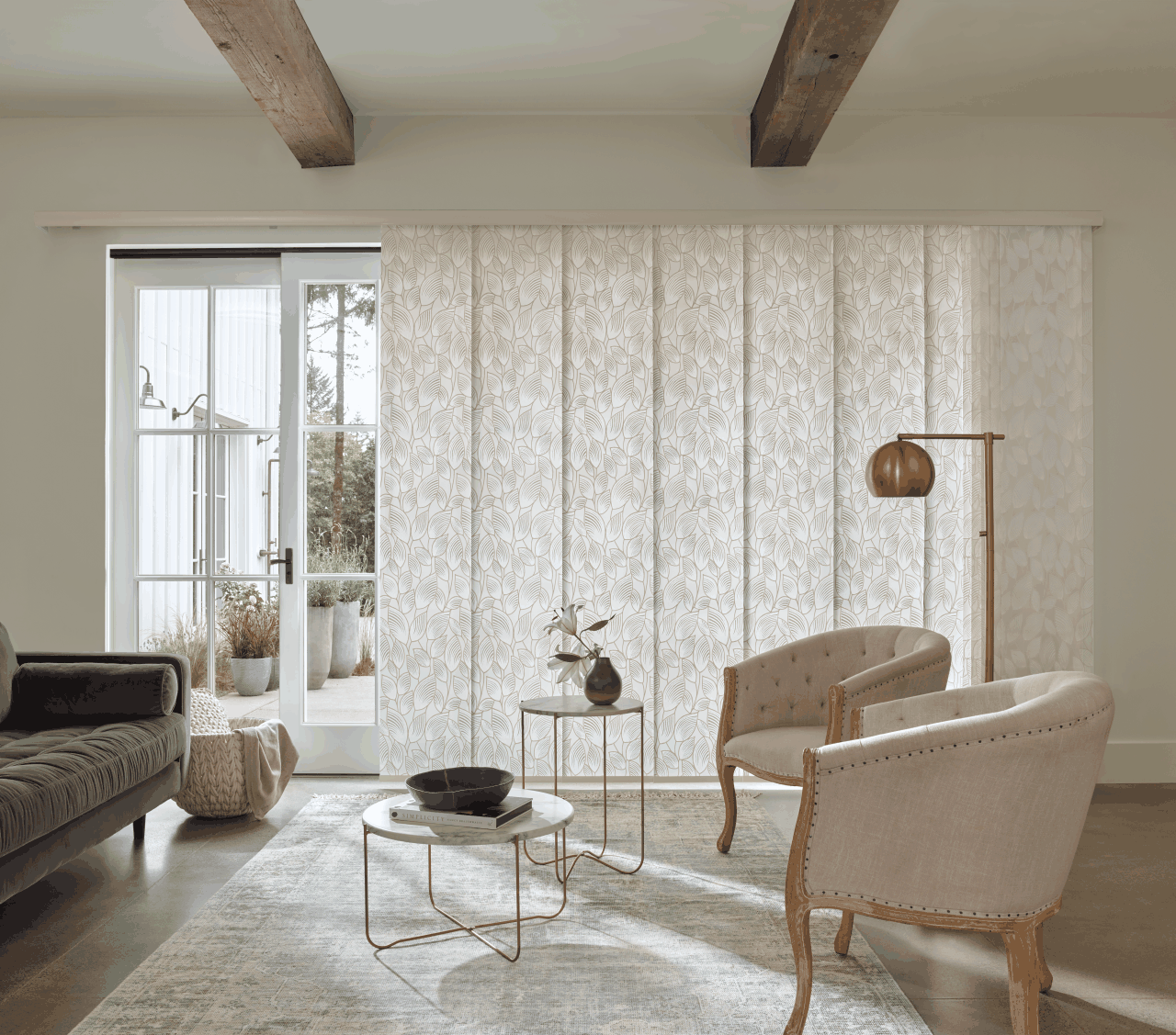
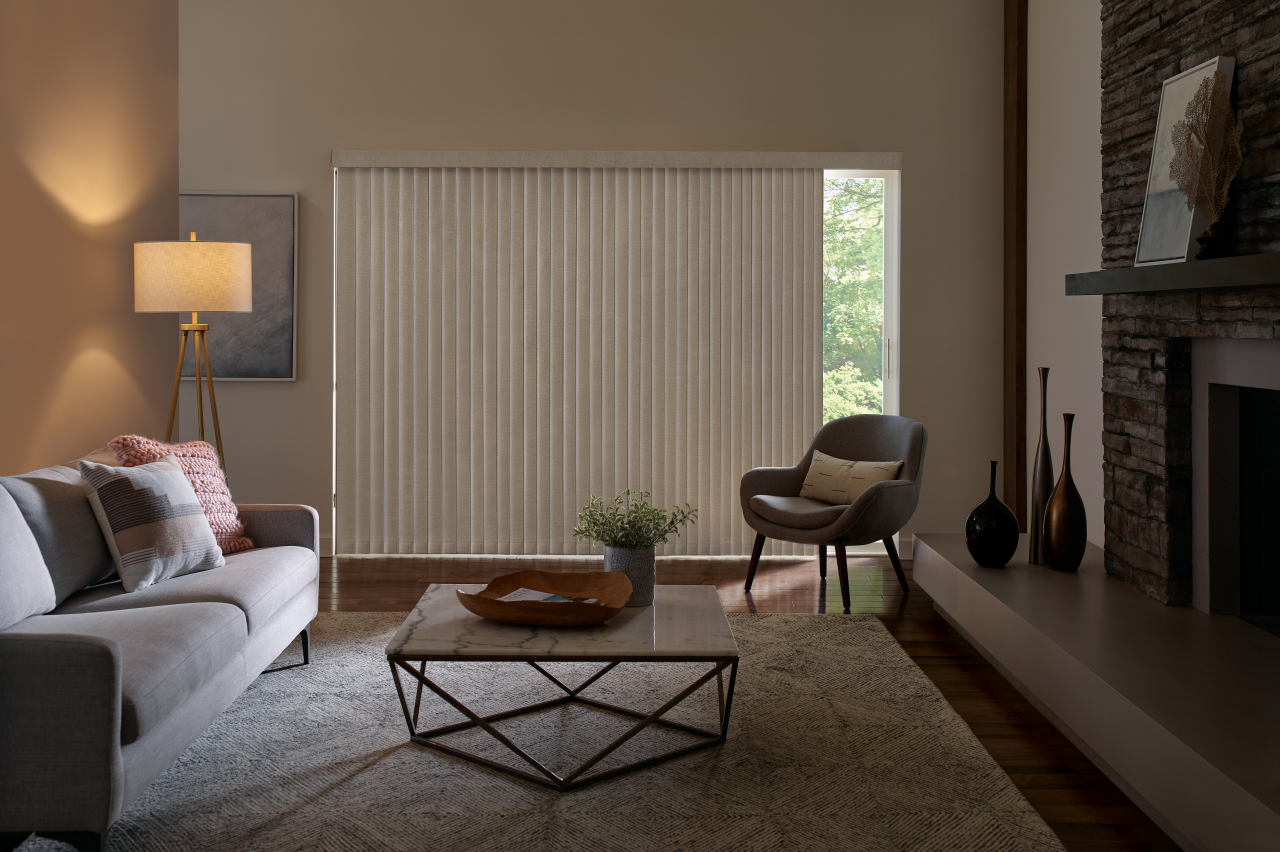
Vertical and gliding panel treatments can suit sliding doors, tall windows, and wide expanses of glass. Compare stacking direction, panel or vane scale, view when open, track placement, material, and the amount of privacy needed after dark.
Soft Fabric Blinds
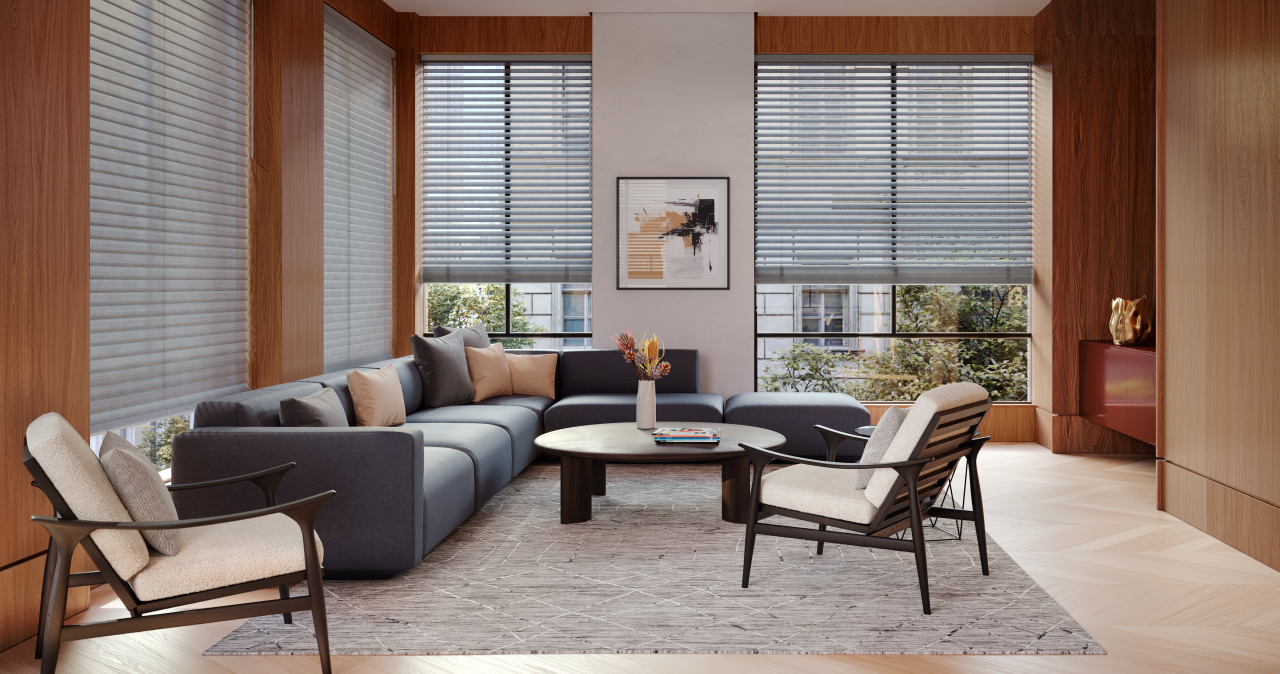
Soft fabric blinds diffuse daylight with a lighter appearance than conventional hard slats. Translucent fabric can create a gentle glow, but it should not be treated as room darkening unless the selected fabric and configuration support that result.